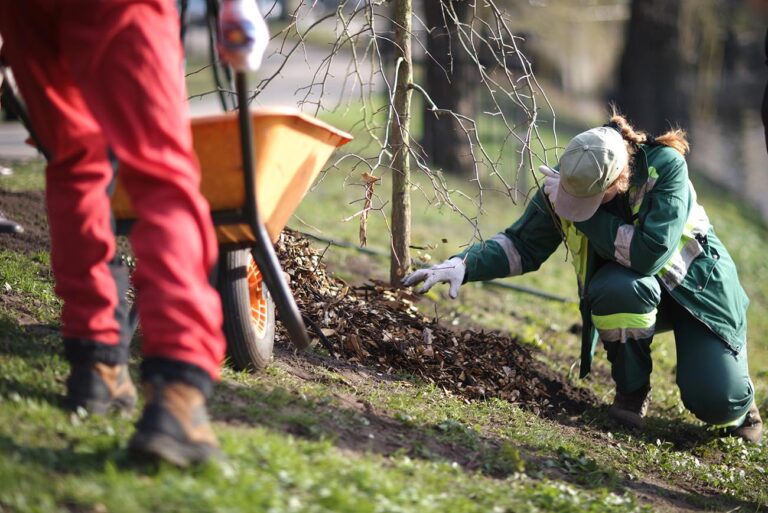
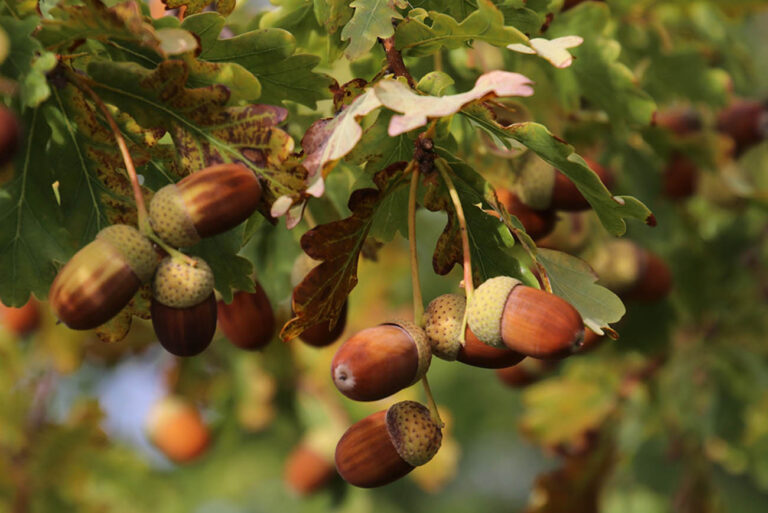
We want to give you the best chance of successfully raising a mature oak. So here are some quick tips for nurturing your tree.
In order to offer your new oak the ultimate protection against wildlife, you can place small wire cages over the top of your new tree until it has grown five foot in length. Be sure not to dig these into the ground, you do not want the roots to become attached to the cage.
Keep the area around your oak weed free!
Step away from the fertiliser! Oak trees take their time to grow, trying to speed things up will only rush a delicate process and weaken your tree. This will lead to splitting wood and broken branches.
Feel free to Mulch with oak leaves, but don’t overload your tree with debris. It could cause your trunk to begin rotting.
Your oak tree will benefit from regular pruning throughout its life to encourage growth spurts and for removal of deadwood or disease. If you are completely new to the world of pruning, why not check out our blog A Beginner’s Guide to Pruning for a quick brush up on the basics.
Oak Tree Care: Pests
You now have yourself a fully established oak tree! Tree-mendous! But wait, our hard work and care doesn’t end there. Regularly inspect your tree for any of these symptoms to protect it from pests and disease. If you do spot something troubling, you may need the help of a professional. Feel free to get in touch and seek some friendly advice from our team.
Oak Mildew
Appears in the form of a white/grey powder sprinkled on the leaves and shoots of your tree. In time leaves begin to turn black and lose moisture. It commonly lurks its head during periods of damp, humid, summer weather and contributes to oak decline.
Oak Decline
If dark liquid starts to leak from the trunk of your tree, or you notice small 3mm holes popping up all over the place, you may have oak decline. Earlier signs appear in the form of yellowing leaves, lesser leaves and dead branches; Although these symptoms are not exclusive to oak decline.
If you come across a confirmed case of Oak Decline, you can report it for research and conservation purposes to the Forestry Commission via their Tree Service Alert.
Knopper Gall
Knobbly looking growths that are visible at the end of acorns. These are the cause of tiny wasps known commonly as gall wasps. Whilst this won’t be fatal for your tree, it will affect your acorns ability to germinate.
Totrix Roller Moth
If you notice your oak is losing its leaves around May/June time or your leaves seem to have rolled up into tubes, you may have moths. As a caterpillar these creatures feed on the leaves of your tree. Serious infections can completely rid your tree of leaves and it will no longer be able to photosynthesise.
And there you have it, your complete guide to Oak Tree Care. If you do spot something troubling, you may need the help of a professional. Feel free to in-tree-duce yourself to our professionals and receive some friendly advice from our team.